Leather - cleaning and care
Reading time: 7 minutes
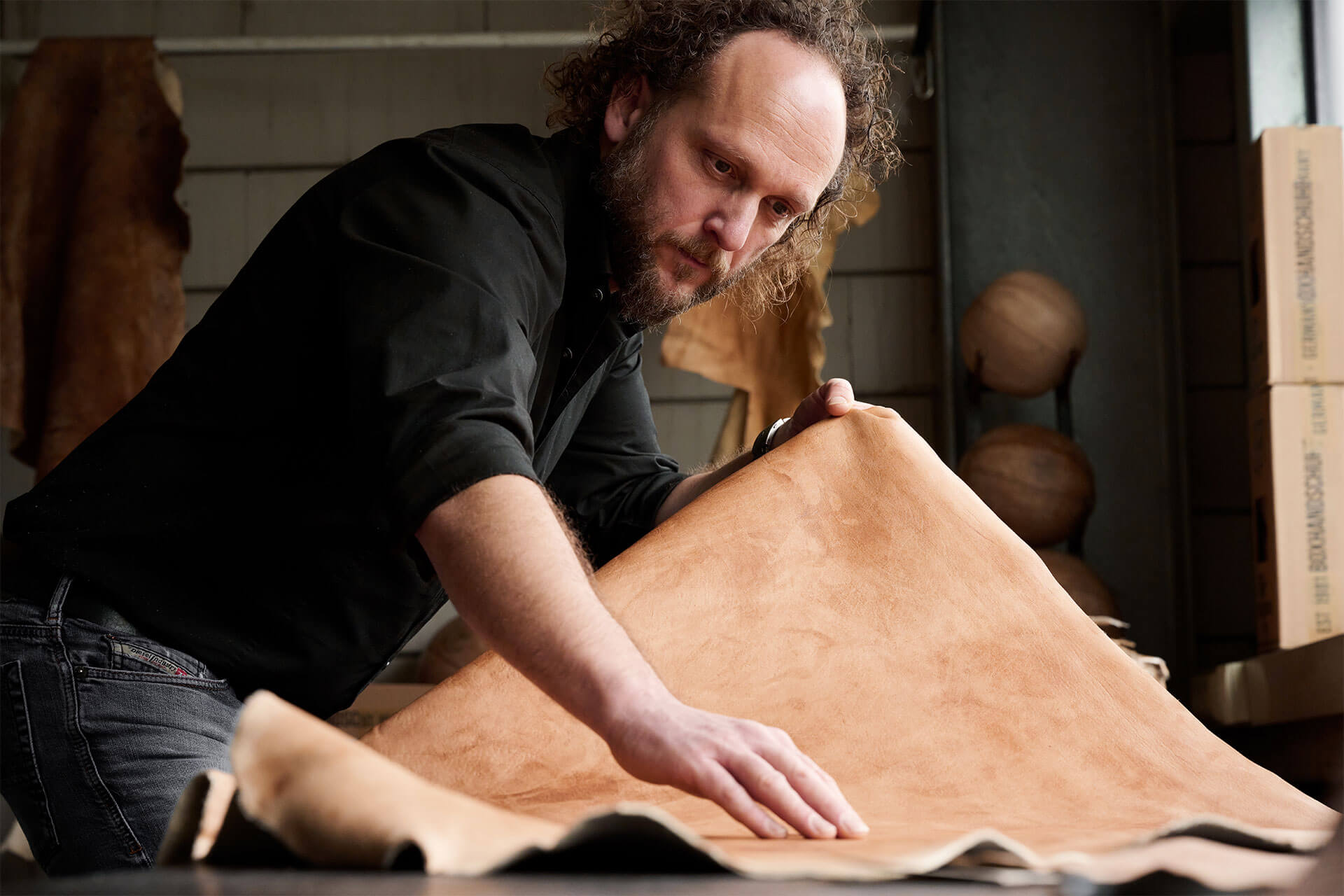
Regular training, sweat, cosmetic residue, and sebum, as well as sun exposure, take a toll on all types of leather. While this natural product is durable and low-maintenance, it occasionally needs a dose of care to remain attractive and functional for many years.
Contents
What is leather?
What is synthetic leather?
Is leather sustainable?
How is leather produced?
What are the advantages of genuine leather?
How to clean leather correctly
Cleaning leather: Care and preservation
Leather care: How to prevent new soiling and mold
How do I properly care for the leather of the ARTZT Vintage Series?
What is leather?
Sports and training equipment is expensive, and those who regularly maintain their gear will save a lot of money in the long run and extend the lifespan of their training equipment.
Leather, as a natural product, needs a certain amount of care – similar to human skin – to maintain its positive properties. So grab your leather soap and appropriate care products! Whether it's an elegant sports bag made of smooth leather, leather-covered dumbbell handles made of nubuck or suede, or fitness equipment made of vintage-style greased leather – there are individual care rituals for all types of leather.
What is synthetic leather?
The question of whether synthetic leather or genuine leather is better is not easily answered, as quality primarily plays a decisive role in its use. And there is both cheap synthetic leather and genuine leather produced under inhumane and environmentally damaging conditions.
Synthetic leather consists of a fabric layer to which a plastic membrane with a leather look is applied.
Cheap synthetic leather products pose a high environmental burden, partly due to their production and petroleum-based ingredients, and partly because they usually have a very limited lifespan and thus end up as plastic waste in landfills or even in the sea sooner rather than later. Haptics and optics often leave much to be desired, and after intensive use at the latest, the plastic coating peels off the fabric, and the product becomes unusable.
Yes, there is now also plant-based synthetic leather. But the use of petroleum for the plastic coating in most plant-based synthetic leathers also represents a minus for the environmental balance. There are also plant-based leather imitations like cork leather and mushroom leather that do not require a plastic coating, but they differ significantly from the properties of genuine leather, are less durable, and can therefore only replace it to a very limited extent.
Is leather sustainable?
As long as humanity consumes meat, there will be genuine leather, because the raw material for it is automatically produced with every slaughtered animal. If the animal hide is not processed into leather, it ends up as waste. From a sustainability perspective, this is a waste, as the animal should be processed as completely as possible for useful purposes if it is slaughtered at all. It doesn't get more sustainable than that.
How is leather produced?
The animal hide only becomes leather through the time-consuming and complex process of tanning. The tanning process is crucial for how environmentally friendly the production of the leather is. Today, there are both vegetable and chrome tanning processes that can be used to produce genuine leather in an environmentally friendly way.
Although genuine leather is complex to produce, high-quality leather results in a sustainable natural product with a unique character.
What are the advantages of genuine leather?
Genuine leather, such as elaborately produced and refined cowhide, is abrasion-resistant and extremely durable, as well as very long-lasting. And therefore also sustainable! Compared to synthetic leather, which by no means comes close to the longevity of genuine leather, high-quality leather is also more environmentally friendly to produce.
With proper care, durable cowhide remains usable for many years and decades and can even be passed on to the next generation – this is proven by thousands of gymnastic equipment from "Turnvater" Jahn's time that are still in use.
How to clean leather correctly
Of course, the visual accents on almost natural suede, nubuck, or vintage leather are what make genuine leather appealing, but it's also clear: leather, as a natural product – similar to human skin – needs a certain amount of care to maintain its positive properties.
Before you start with care, the leather is thoroughly cleaned, because without cleaning, dirt, dust, and salts from training sweat, as well as sebum, would penetrate the leather during oiling and greasing and eventually decompose it. Mildew and mold also like to accumulate on dirty leather that is used or stored in a damp environment.
Dirt in seams and crevices attracts moisture, especially there, cleanliness should be maintained more frequently to avoid mildew stains and mold. Regular dusting is therefore just as important as supplying the leather with oils and fats. This can be done with a soft brush and, in hard-to-reach areas, also with a narrow vacuum cleaner nozzle or brush. An insider tip from the leather specialist: For particularly fine seams, dust can be removed very well with compressed air from a compressor. But special mini attachments for a normal vacuum cleaner also work perfectly for cleaning in corners, on edges, or seams, etc.
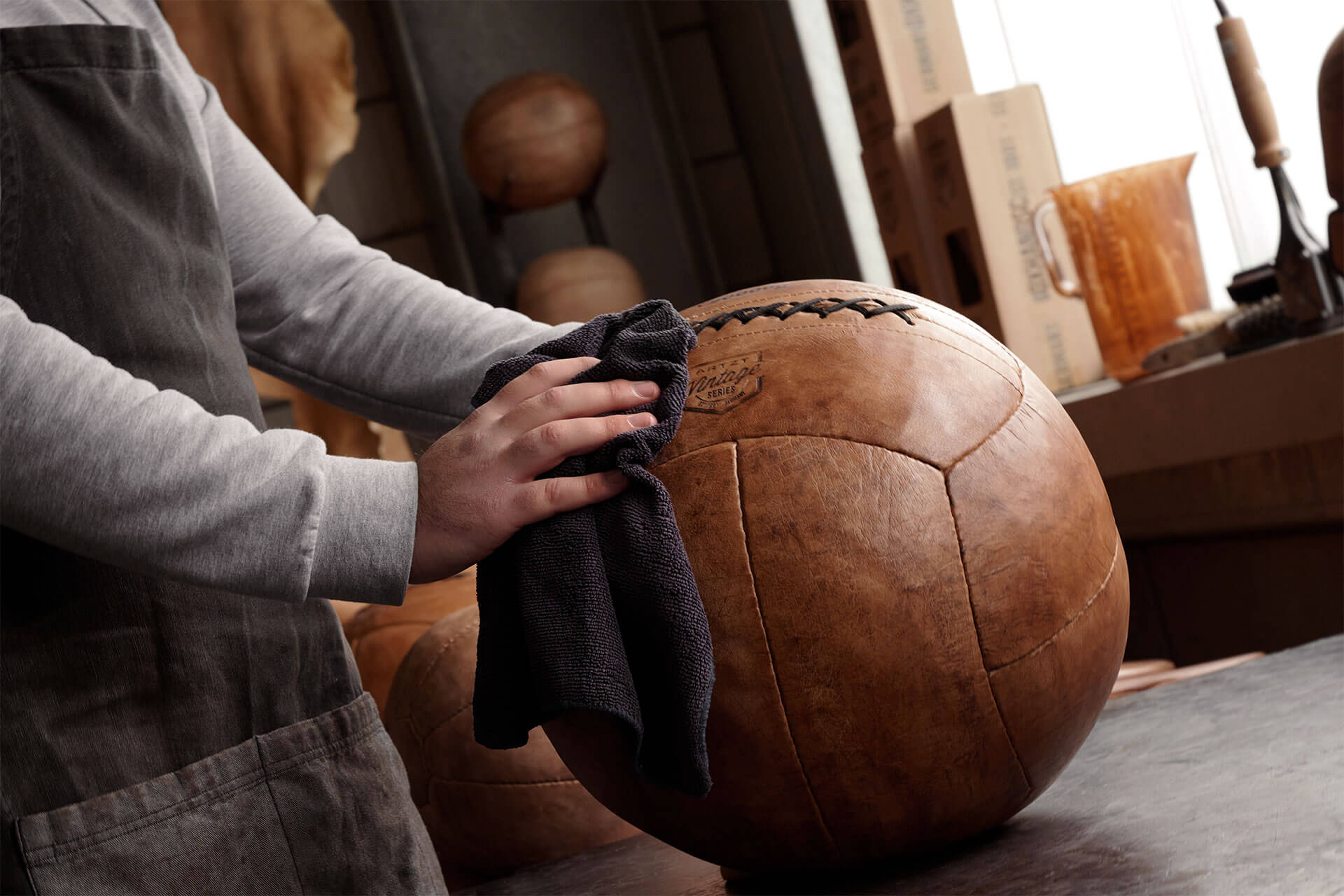
After dusting, the open-pore leather is wiped damp – not wet! – with a microfiber cloth. With the help of a very fine steel or rubber brush, the leather can be carefully roughened again after drying.
Extra tip: If the dust in a seam is already caked, you can try your luck with an electric (ultrasonic) toothbrush. Used dry, it usually succeeds in removing even stubborn dust crusts.

Soap is not suitable for all leathers
After dusting, smooth leather is cleaned with a high-quality saddle soap or leather soap. With a soft sponge, the soap is lathered with a little water and then applied to the leather. Adhering dirt and sweat, i.e., everything that particularly soils and consequently stresses the leather, is thus dissolved and can be removed and wiped away with the sponge in a second "wash cycle." The saddle soap foam can then act for a moment until it has dried slightly, and is then wiped off with a soft cloth. Complete drying of the dirt-soap mixture should be avoided, so larger leather surfaces should be treated piece by piece.
By the way, suede and nubuck leather, as well as the specially refined open-pore cowhide of the Artzt Vintage Series products, do not like saddle or leather soap. Because rough, open-pore leathers stick together and become smooth if they are treated with a sponge and saddle soap, thus losing their unique feel and appearance.
These types of leather are thoroughly wiped with a damp microfiber cloth without any additives – in case of heavy soiling, change or rinse the cloth more frequently and then wring it out firmly.
Dark spots on light leather?By no means should one use dirt erasers – as sometimes described in various forums. These are made of melamine resins and damage the leather with every application by roughening it and thus destroying the surface. Here, a good, conventional leather cleaner from a specialist retailer should be used. |
Cleaning leather: Care and preservation
After cleaning with soap, smooth leather also needs to dry thoroughly. The same applies to damp-wiped leathers, such as the high-quality cowhide of the ARTZT Vintage Series fitness tools. It is best to store the leather overnight in a dry, not too warm place (not near the heater!) where residual moisture can evaporate well.
Under no circumstances should leather dry in direct sunlight! In general, even with good care, leather becomes brittle and dries out under UV radiation, so leather items should generally not be exposed to direct sunlight longer than necessary.
Once the leather is well dried, further care is applied if needed. Suede and nubuck leather become greasy and smooth with the use of oils and fats, which is usually undesirable. To roughen it up again after cleaning, brush it with a special rubber suede brush. However, all suede and nubuck leather will become "greasy" over time and with use. Then, by the way, it can be treated like any other open-pore leather – with the consequence, however, that the rough effect disappears more and more.
All smooth, open-pore leather surfaces can be oiled or greased. It goes without saying that high-quality oils or quality fats and care products based on beeswax are used, depending on the leather and its demands. If you opt for oil, you can use high-quality vegetable oils in addition to special leather oils. Peanut oil is considered an insider tip here.
However, you should be extremely sparing with oils: applied too thickly, they make the leather spongy and too soft, which is undesirable, especially in sports and fitness, and leads to impaired use.
While oil penetrates leather quickly and deeply but offers no protection against moisture and wetness, high-quality beeswax-based leather care, as found in various combi-products on the market, forms a protective film on the leather surface that largely prevents moisture from penetrating the leather.
Especially light natural leather darkens considerably when oiled, so natural-colored leather articles should generally be treated with beeswax-based care products.
Material scienceVelour leather – also called suede, nubuck, or rough leather – is the generic term for all types of leather sanded on the flesh side of the animal hide. Velour leather can come from almost any animal and is used for every application. On the one hand, it can be made from the side of the hide away from the fur (split leather) or from smooth leather sanded on the grain side. The sanded leather types are very soft and supple, but much more susceptible to dirt than smooth leather. Over time, much-used velour leather often becomes greasy, which can, however, give it a very special look. Smooth leather is made from the former fur side of the animal and can be grained, embossed, smooth, and textured. Surface-dyed smooth leather is covered with a layer of color and is less sensitive to stains and drying out, but often feels artificial. Open-pore dyed leather has different properties depending on its thickness. It feels warm and soft but is more sensitive to stains and dries out faster. Greased leather has a very special character. It is supple but matte in appearance and develops a beautiful patina over time. This leather is provided with a colored fat or wax layer on the surface. This makes the leather darker and slightly irregular in its coloring. Greased leather can be recognized by the fact that light streaks can be caused by a fingernail. They disappear again after polishing. |
How to prevent new soiling and mold
Once all leather parts are clean and cared for again, the question naturally arises how to maintain this condition for as long as possible. Not quite easy with daily use and strenuous training. Especially mildew and mold attack medicine balls and the like very quickly if they are not stored in an airy and dry place. If you want to be completely on the safe side, wipe the leather with a terry cloth after training if it is heavily used and ventilate the training room well. For leather sports bags: After sports, remove all damp items such as clothes, shoes, and towels and store the bag dry until its next use.
How do I properly care for the leather of the ARTZT Vintage Series?
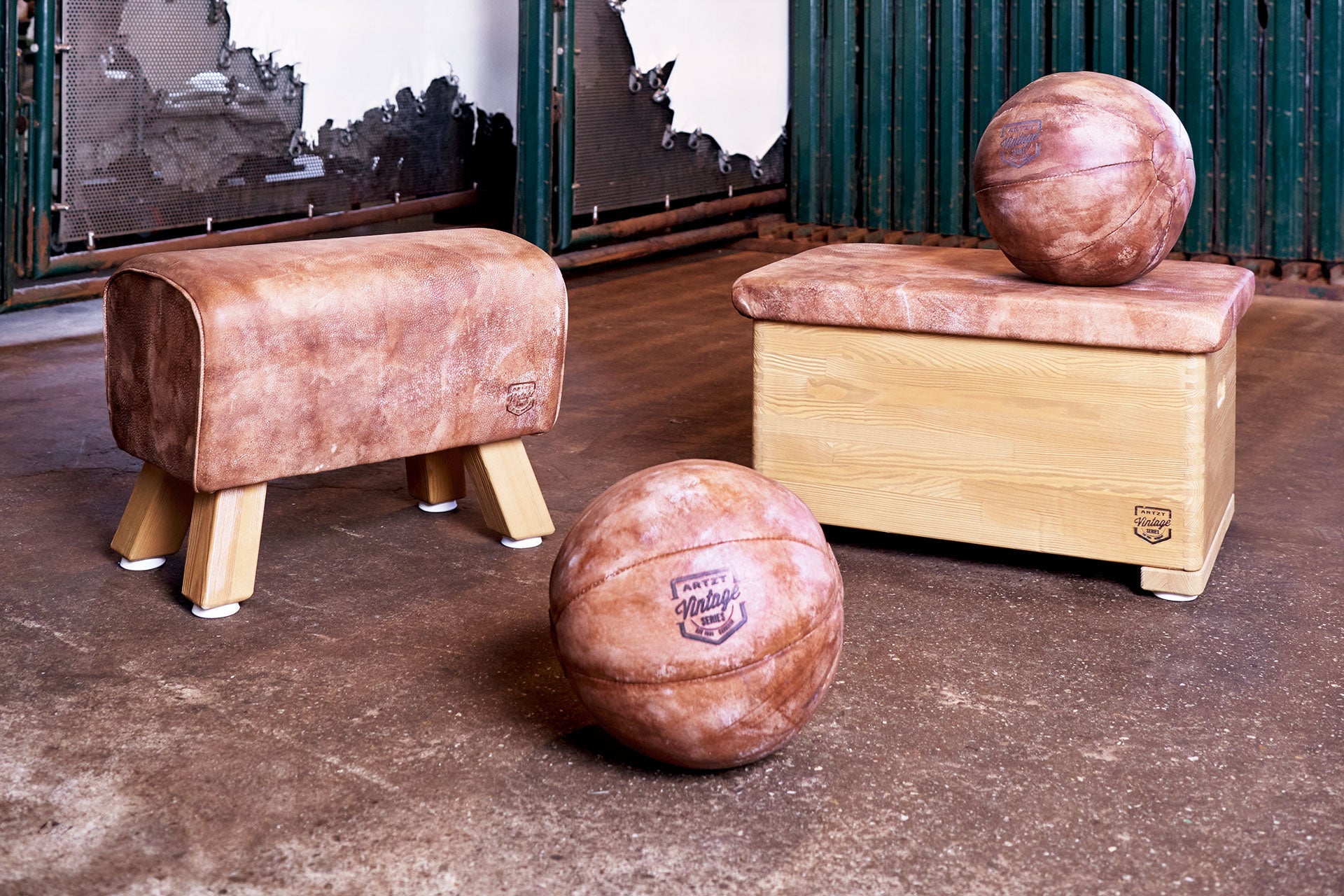
The classic fitness tools of the ARTZT Vintage Series, as well as the leather of the bench, pommel horse, and box, are made from high-quality and specially hand-finished, open-pore cowhide. It is precisely the daily use of these items that helps to enhance the individual look of the classics and maintain the desired aesthetic. However, the care rituals described above must also be performed here.
Those who regularly pick up the damp microfiber cloth and, after drying, sparingly and thinly rub in a high-quality vegetable oil, will enjoy the products for many years, if not decades.